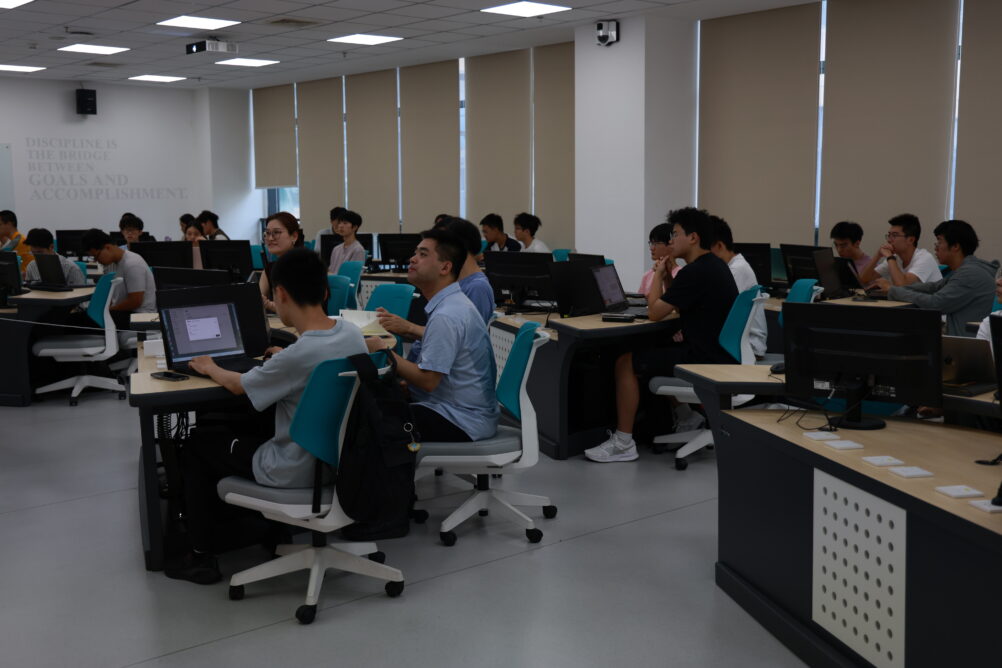
SCUPI Invites Tencent Cloud Expert Dr. Yang Jin to Share Cutting-Edge Insights on the Agent Era
Published on: July 7, 2026 | Views: 241
On the morning of July 6, 2026, the 2026 Innovative Engineering Practicum of Sichuan University–Pittsburgh Institute (SCUPI) was successfully launched.
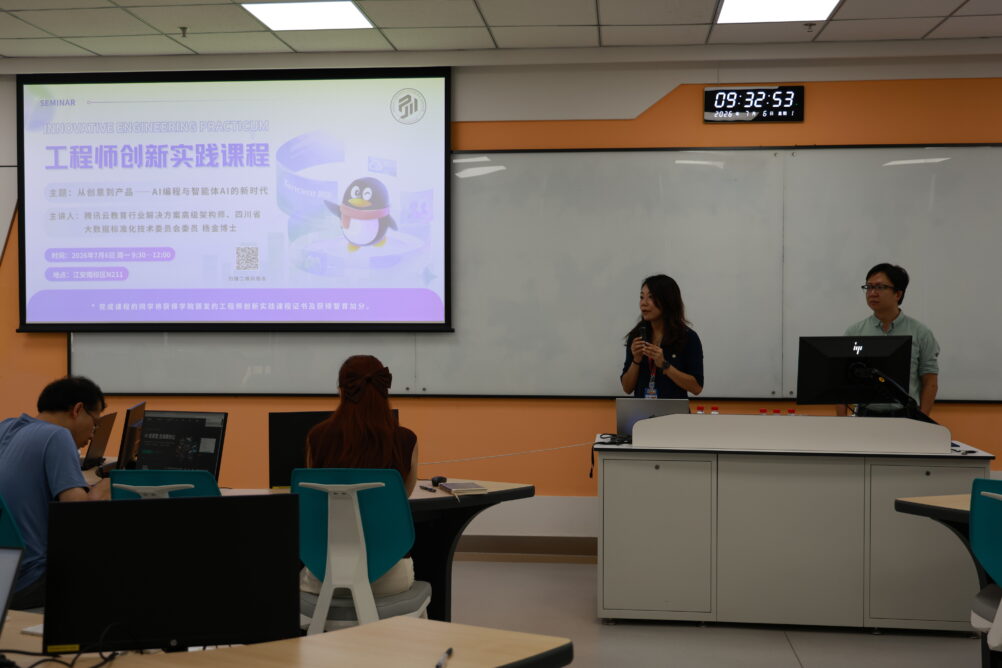
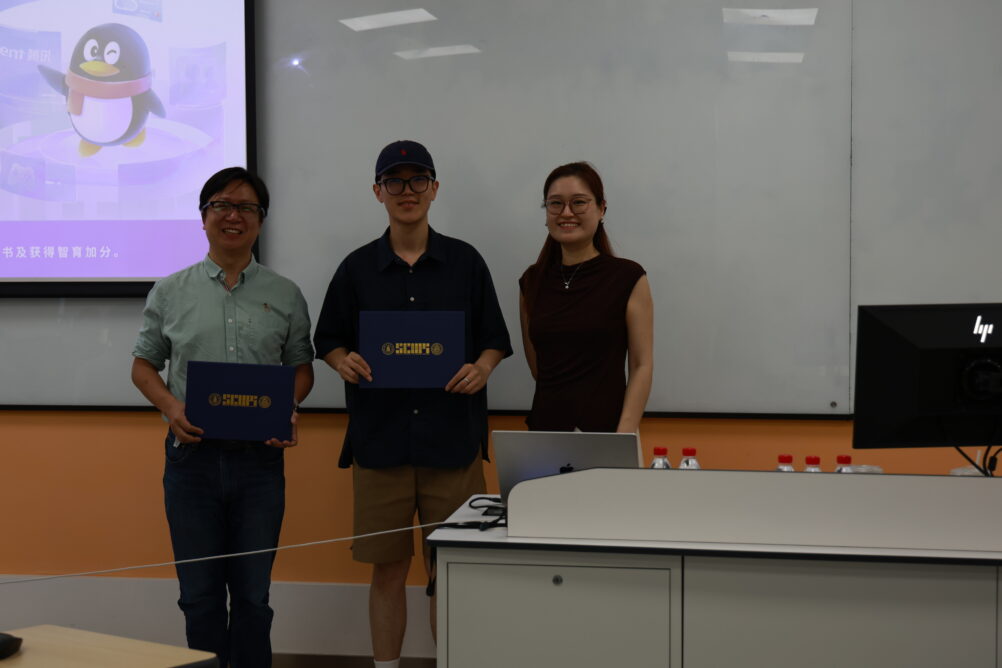
This session featured Dr. Jin Yang, Senior Architect of Tencent Cloud Education Industry Solutions and Member of the Sichuan Provincial Big Data Standardization Technical Committee, as the keynote speaker. He delivered an industry frontline sharing titled “From Idea to Product: The New Era of AI Programming and Agent AI.” Assistant Dean of Academic Affairs Dr. Di Liu presented certificates of appointment to Dr. Jin Yang and Mr. Jingchi Wang, Head of Tencent Education for Southwest China. Faculty representatives including Dr. Yang Liu, Dr. Sophia Zuoqiu, Dr. Xiaomei Tan, and Dr. Jue Gong attended the lecture.
Dr. Yang began with the latest trends in AI technology development, systematically explaining the core logic and application prospects of Agent technology. He noted that 2026 has been dubbed the “Year of the Agent,” as AI evolves from the traditional “conversation as reference” model to “conversation as action”—no longer merely an advisor offering suggestions, but a digital collaborator capable of autonomous planning, tool invocation, execution, and delivery of verifiable outcomes.
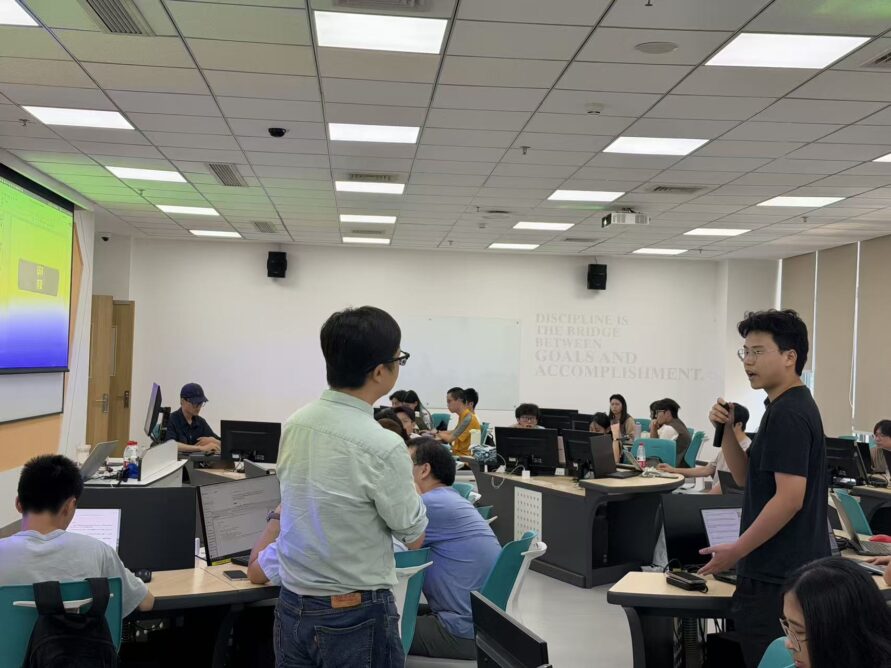
In his sharing, Dr. Yang emphasized a critical insight for engineers in the AI era: “Understanding the systems engineering thinking behind Agents is more valuable than mastering ten Prompt techniques.” He pointed out that many learners fall into the trap of “Prompt engineering,” investing excessive energy in memorizing and stacking prompt templates while neglecting the systems architecture thinking, task decomposition capabilities, and engineering methodologies underlying Agent technology.
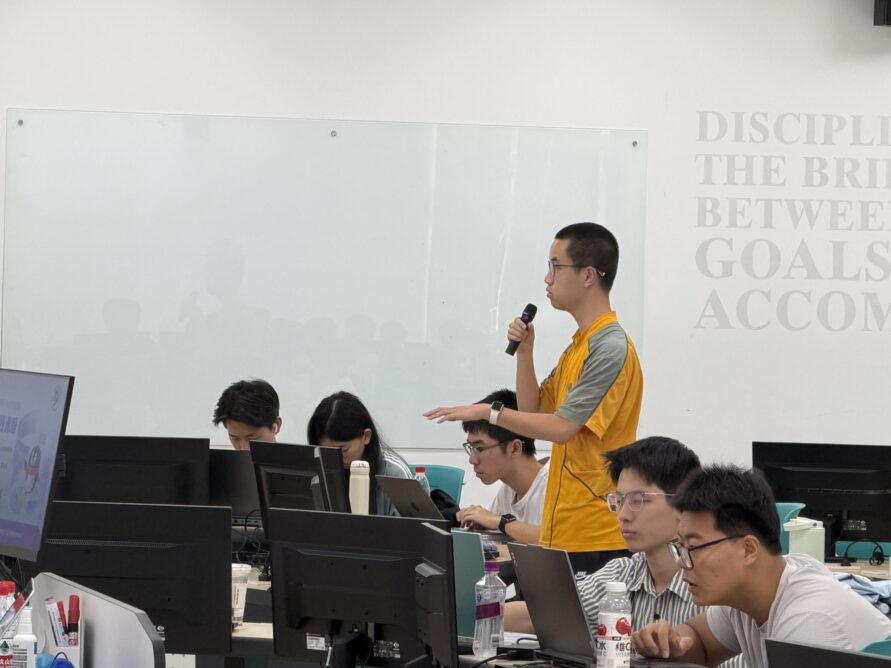
Dr. Yang proposed the golden rule of Human + AI collaboration: let AI be your collaborator, not your replacement; you take charge of thinking and decision-making, while AI handles execution and verification. Under this framework, human core value lies in problem definition, direction judgment, quality control, and creative thinking, while AI assumes responsibilities such as information retrieval, code generation, data processing, and repetitive execution. This division of labor is not a replacement of human capability but an expansion of its boundaries—engineers can redirect more cognitive resources toward high-level system design and innovative activities.
Addressing students’ concerns about whether “AI will replace programmers,” Dr. Yang offered a clear assessment: as single-model capabilities rapidly converge toward homogenization, it is engineering capability—encompassing requirements analysis, systems architecture design, multi-module coordination, quality assurance, and continuous integration and delivery—that constitutes the irreplaceable core competitiveness of future engineers. Agent technology lowers the barrier from idea to prototype, yet the chasm from prototype to reliable product can only be bridged by profound engineering expertise.
Dr. Yang encouraged students to focus on foundational thinking training alongside mastering AI tools: understanding the decision-making logic of Agents, mastering task decomposition and orchestration methodologies, and cultivating a critical eye for evaluating AI outputs. Only by internalizing AI tools as an organic component of one’s capability system can one maintain sustained competitiveness in the Agent era.
SCUPI Innovative Engineering Practicum was not merely a sharing of technological frontiers but also a profound reflection on the role of engineers in the AI era. In an age where Agent technology evolves at breakneck speed, only by adhering to the principle of “human-centered, thinking at the core” can we navigate the tides of technology and truly achieve the leap from idea to product.