
SCUPI Students Use Artificial Intelligence to Uncover the Mechanisms of Medical Equipment Degradation in Senior Design Project
Published on: April 10, 2026 | Views: 287
Recently, undergraduate students majoring in Industrial Engineering at Sichuan University-Pittsburgh Institute (SCUPI) have made new progress in their senior design project in the field of intelligent operation and maintenance of medical systems. The research jointly completed by faculty and students of the institute in collaboration with West China Hospital of Sichuan University, titled “Towards AI-Driven Smart Maintenance of Computed Tomography Equipment: From Health Indicator Design to Transferable Remaining Useful Life Prediction,” has been published in the prestigious journal Reliability Engineering & System Safety (impact factor 11.0, Q1 Top journal) (Fig. 1). This achievement highlights the strong capability of undergraduate students at SCUPI to conduct cutting-edge research supported by high-level scientific platforms.
Based on real-world clinical scenarios and operational data from the Internet of Medical Things (IoMT), the study integrates artificial intelligence (AI) techniques to address degradation modeling and remaining useful life prediction of key components in large-scale CT imaging equipment. It proposes a predictive maintenance (PdM) framework that combines physical mechanisms with deep learning, offering a new technological pathway for ensuring the safe operation and intelligent maintenance of medical imaging equipment.
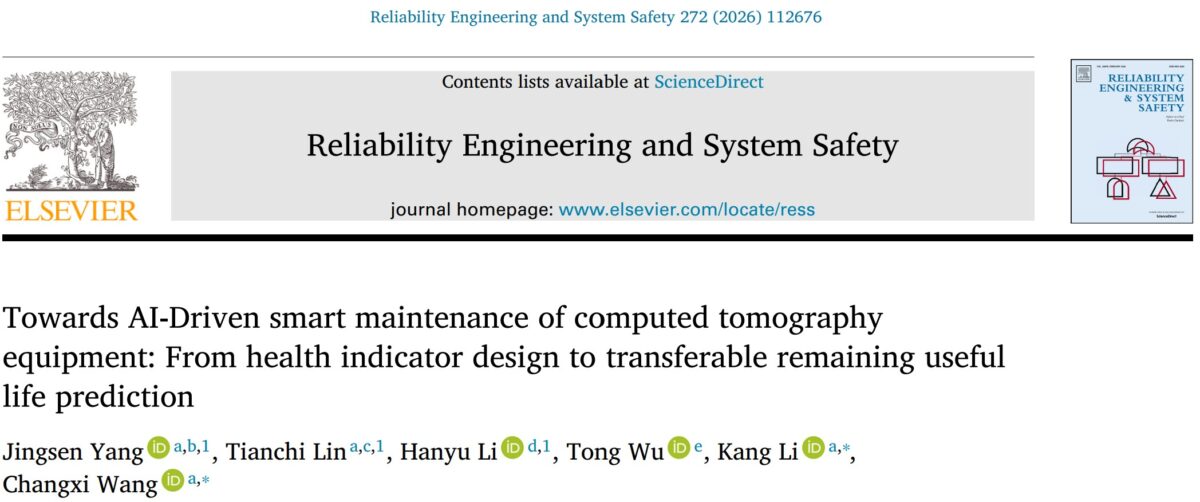
Fig. 1. The work published in the prestigious journal Reliability Engineering & System Safety
Jingsen Yang and Tianchi Lin, who participated in this study, are both undergraduate students from the Class of 2021 majoring in Industrial Engineering at SCUPI. During their studies, the two students conducted research training through the institute’s Reliability and Intelligent Risk Management Laboratory, focusing on areas such as health management of medical equipment, reliability modeling, and the application of artificial intelligence methods. They were deeply involved in data analysis, model development, experimental validation, and academic writing.
As an important component of their undergraduate graduation project, this research not only enabled them to effectively integrate industrial engineering, data analytics, and AI methods, but also deepened their understanding of engineering challenges and research methodologies within real clinical environments. During their senior year, both students also participated in the 10th International Conference on Cloud Computing and Big Data Analytics (ICCCBDA), where they presented their research findings and engaged in academic exchanges with experts and scholars in the field (Figs. 2 and 3).
At present, Jingsen and Tianchi are working towards their master degrees at University of Illinois Urbana–Champaign and the Georgia Institute of Technology, respectively. Their academic journey demonstrates the SCUPI’s strong outcomes in cultivating talent at the intersection of AI, big data, and medical engineering, and reflects the effectiveness of leveraging high-level research platforms to promote undergraduate research training and international development.
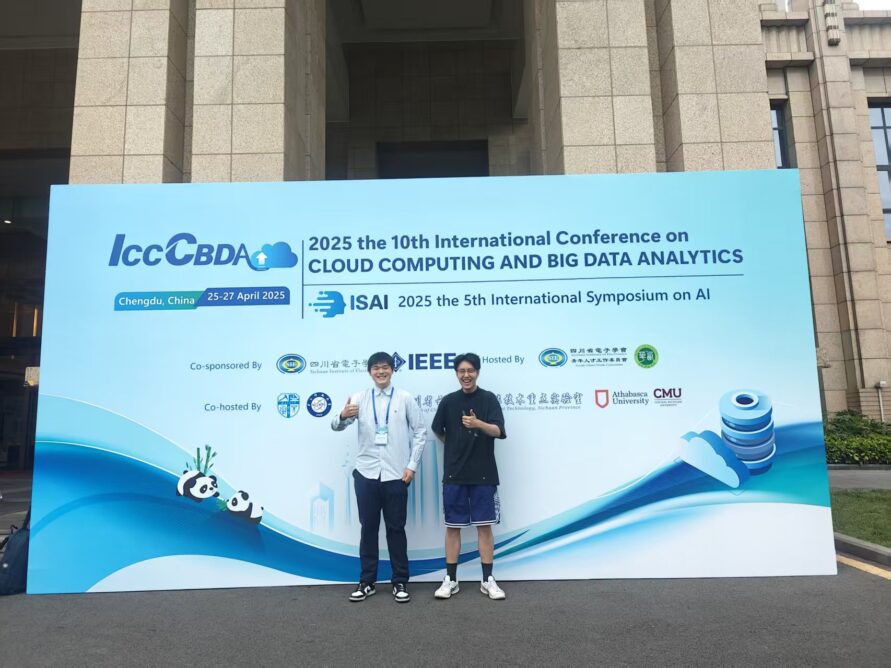
Fig. 2. The 10th International Conference on Cloud Computing and Big Data Analytics (left: Jingsen Yang, right: Tianchi Lin)
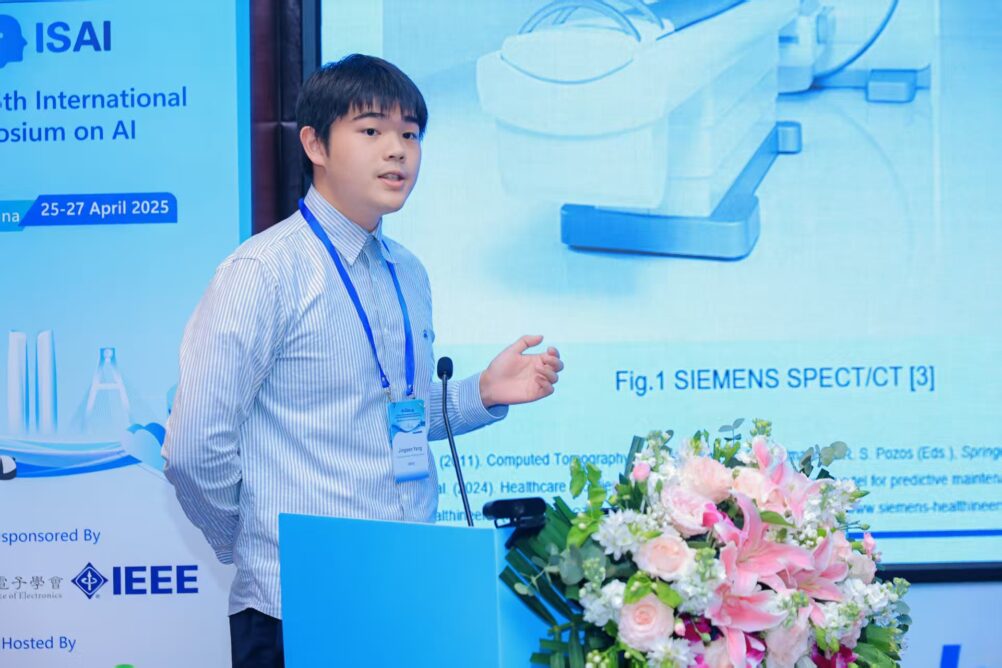
Fig. 3. Jingsen Yang is giving the presentation at ICCCBDA
This study is based on operational data from CT equipment in real clinical scenarios, as well as multi-source information collected within an Internet of Medical Things (IoMT) environment. Targeting key challenges, such as significant fluctuations in degradation signals of X-ray tubes under complex working conditions, the difficulty of directly characterizing health states, and the limited cross-device applicability of existing models, the research establishes a methodological framework for predicting the remaining useful life (RUL) of critical CT components.
Specifically, the study first identifies, decouples, and preprocesses raw time-series data by incorporating operational factors such as scanning modes and load conditions, thereby reducing the interference of varying working conditions on degradation signals. It then employs a Random Forest model to learn the nominal variation patterns of filament current under healthy conditions, and defines the residual between observed and nominal values as a health indicator to characterize the actual degradation process of the X-ray tube.
Building on this, a BiLSTM-Seq2Seq model is further applied to capture the temporal evolution of the health indicator. Combined with a cross-device transfer learning strategy, the framework leverages the strengths of AI in modeling complex time-series data, enabling continuous prediction of the RUL of critical CT components (Figs. 4 and 5).
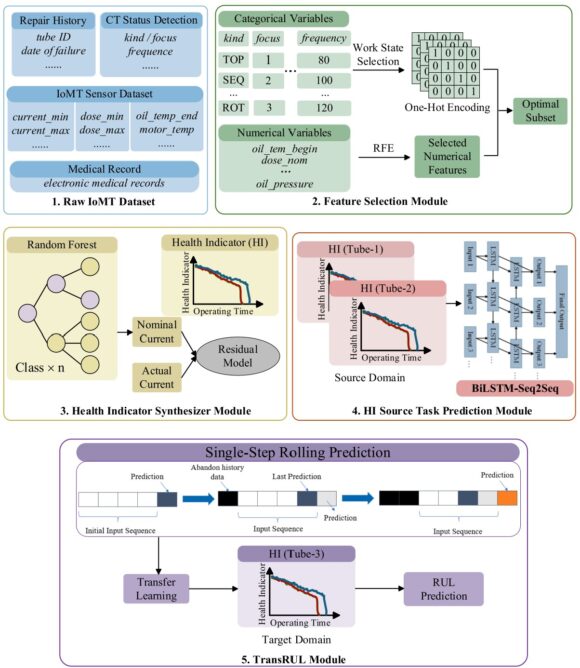
Fig. 4. The proposed PdM and RUL prediction framework
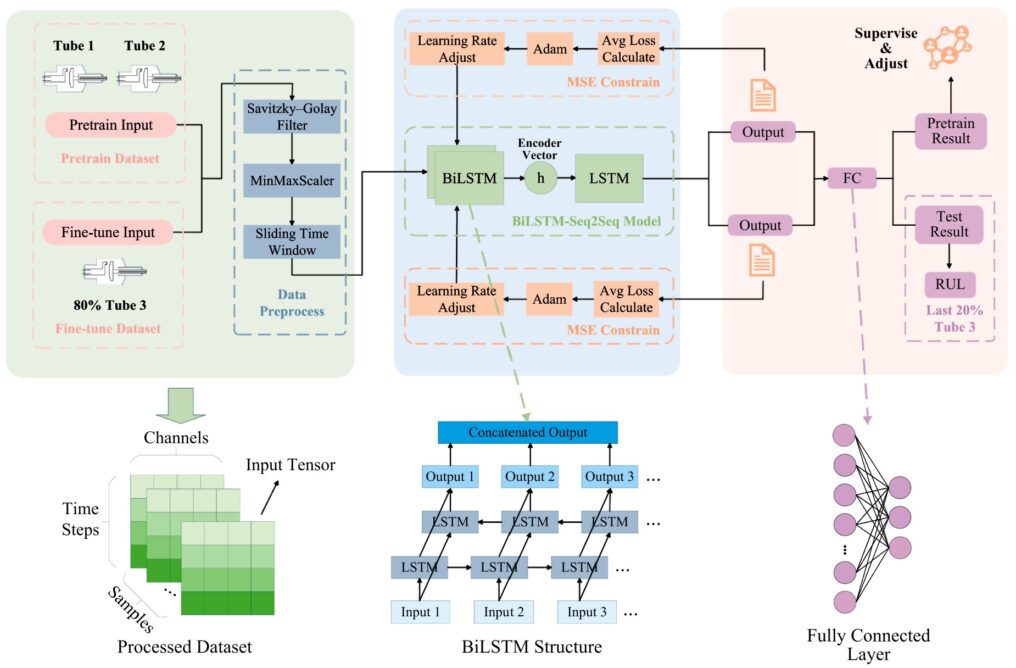
Fig. 5. Schematic diagram of the cross-device transfer learning strategy
The achievement of this research would not have been possible without the strong support of high-level scientific research platforms. The senior design project topic originates from major research initiatives led by Associate Professor Wang Changxi, head of the Reliability and Intelligent Risk Management Laboratory at SCUPI. These include the National Natural Science Foundation of China (NSFC) Key International (Regional) Cooperative Research Project, jointly applied for with the Department of Industrial Engineering at Tsinghua University and the Department of Industrial Engineering at Rutgers University, titled “Reliability Management of Intelligent Unmanned Systems for Complex Mission Scenarios,” as well as the National Key R&D Program of China project, jointly applied for with West China Hospital of Sichuan University, titled “The Research and Evaluation System Construction of Common Key Technologies of Reliability of Range of Emergency Treatment Equipment.”
Associate Professor Changxi Wang has long been engaged in research in areas including reliability engineering, intelligent operation and maintenance, AI, stochastic processes, and medical informatics.
SCUPI continuously provides students with opportunities to engage in national-level, high-impact research projects, encouraging them to enhance their capabilities in data analysis, modeling, and academic communication through hands-on project experience, while broadening their academic horizons through systematic research training. For undergraduate students, such platforms not only offer access to cutting-edge problems and real-world data, but also serve as a vital bridge from classroom learning to research practice, and from knowledge acquisition to problem-solving.
SCUPI remains committed to leveraging high-level research to support high-quality talent cultivation, and continues to promote deep interdisciplinary integration across industrial engineering, AI, data science, and biomedical engineering. Looking ahead, the institute will further build on its strengths in international education and advanced research platforms to support students in achieving new breakthroughs in areas such as intelligent manufacturing, medical AI, reliability engineering, and data science, and to cultivate more high-caliber, interdisciplinary talents with global vision, strong innovation capacity, and practical skills.
Student Reflection on Manuscript Submission:
This study originated from the practical needs of West China Hospital in the health management and PdM of large-scale CT medical imaging equipment. Accordingly, we chose to submit our manuscript to Reliability Engineering & System Safety, the most prestigious journal in this field. The journal has long focused on topics such as reliability of complex systems, degradation modeling, risk assessment, and engineering safety, which closely align with our research on degradation mechanisms of key CT components, RUL prediction, and cross-device generalization modeling.
We completed the initial draft at the end of our senior design project and submitted it in August 2025. The first round of peer review was completed in November. The reviewers’ comments primarily focused on several key issues: first, why it is necessary to conduct dedicated research on CT equipment, and what distinguishes its complex clinical operating conditions from those of general industrial equipment; second, how the analysis of the degradation mechanism of the X-ray tube filament is concretely incorporated into the construction of health indicators and the design of predictive models; and third, whether the experimental comparisons with existing PdM methods are sufficiently comprehensive, and whether the evaluation metrics and theoretical derivations are rigorous.
To address these concerns, we strengthened our discussion on the unique operational characteristics of CT equipment and the necessity of this research, clarified the correspondence between physical mechanisms, health indicators, and model design, incorporated more comprehensive comparisons with classical and recent strong baseline methods, and provided clearer explanations of certain evaluation metrics and formula derivations. The revised manuscript was resubmitted in January 2026.
The second round of review was completed in February 2026. The reviewers acknowledged significant improvements in the overall quality of the paper and suggested that we further elaborate on the study’s limitations and future research directions, while also refining the presentation of figures and the overall writing. Based on this feedback, we conducted additional revisions and submitted a second revised version in March 2026, after which the paper was formally accepted.
This submission experience has led me to realize that, for PdM research in real-world medical equipment scenarios, achieving strong predictive performance is only part of the goal. It is equally important to clearly articulate the uniqueness of the research object, the physical rationale behind the methodological design, and the model’s generalization capability, supported by thorough and rigorous argumentation. The reviewers’ feedback not only significantly improved the quality of our paper, but also deepened our understanding that research on medical equipment reliability modeling must balance engineering context, methodological innovation, and practical applicability.
Students’ Research Reflection:
Looking back on this undergraduate senior design project, our most profound realization is that research training at the undergraduate level is not merely an extension of classroom knowledge, but a continuous process of engaging with real-world problems, refining one’s understanding, and cultivating patience.
When we first encountered the operational data from CT equipment at West China Hospital, our primary focus was on quickly building models and improving prediction accuracy. However, as the research progressed, we gradually realized that problems in real-world medical equipment scenarios are far more complex than classroom exercises or idealized datasets. One of the most important insights from this study is that, in PdM research for real medical equipment, improvements in model performance do not simply depend on the complexity of the network architecture. More fundamentally, they depend on whether we truly understand the physical nature of equipment degradation.
Unlike many idealized industrial datasets, CT equipment operating data are characterized by frequent changes in working conditions during clinical use. Variations in scanning modes, tube voltage, focal spot position, and anode frequency lead to significant fluctuations in signals, causing the raw filament current to exhibit strong multimodal distributions and substantial noise interference. Under such conditions, if differences in operating regimes are not addressed and raw time-series data are directly fed into predictive models, even sophisticated deep learning approaches tend to yield only limited improvements.
For this reason, we gradually came to realize that the key challenge is not only “how to predict,” but also “how to define signals that truly reflect degradation before prediction.” Building on this understanding, we started from the physical degradation mechanisms of the X-ray tube filament, such as thermal cycling and material evaporation, and defined the deviation between observed filament current and its nominal value under healthy conditions as a health indicator. We further incorporated a degradation path identification module tailored to CT operating conditions to filter and fuse multi-source signals under complex scenarios, thereby extracting smoother degradation trends with stronger physical consistency. On this basis, the introduction of deep learning models, autoregressive prediction, and cross-device transfer learning allowed the strengths of these methods to be fully realized.
At the same time, the benefits of this undergraduate senior design research experience extend beyond academics. The repeated processes of data preprocessing, model tuning, figure refinement, and manuscript revision gave us a deeper appreciation of the long-term and meticulous nature of research work, and taught us how to manage time effectively across coursework, graduation projects, graduate applications, and research tasks. Every group discussion, every exchange of ideas with our advisor, and every round of result verification and revision contributed to the development of our research habits and engineering mindset. In particular, after participating in ICCCBDA 2025 and presenting our work, we came to more fully appreciate that clearly and accurately communicating one’s research is an essential component of scientific training.
For us, this undergraduate senior design project represents more than the completion of a paper. More importantly, it allowed us to experience the full research process, from identifying problems to analyzing and solving them, at the undergraduate level, and strengthened our determination to continue exploring the interdisciplinary field of industrial engineering, AI, and medical engineering. Looking ahead, we also hope to further enrich this experience by incorporating reflections on teamwork, academic communication, campus life, and personal growth, making the story behind this undergraduate research journey more complete.
Author Biography:
First author

Jingsen Yang is a 2025 graduate of the Industrial Engineering program at Sichuan University-Pittsburgh Institute and is currently a master’s student in Industrial and Enterprise Systems Engineering at the Grainger College of Engineering, University of Illinois Urbana–Champaign. He currently serves as a research assistant in the Reliability Analysis and Safety Assurance Laboratory at the University of Illinois Urbana–Champaign, where he is involved in multiple interdisciplinary research projects at the intersection of engineering and medicine. His research interests include PdM based on sensor data, reliability engineering, and the application of AI methods in engineering system health management.
Co-first author

Tianchi Lin is a 2025 graduate of the Industrial Engineering program at Sichuan University-Pittsburgh Institute and is currently a graduate student in Industrial Engineering at the Georgia Institute of Technology. His research focuses on the intersection of AI and medical engineering, with particular interests in reliability engineering, prognosis and health management in healthcare systems, as well as time-series-based medical data analysis and predictive modeling. He is also highly interested in the application of machine learning methods for modeling and decision support in complex engineering systems and healthcare scenarios, and is committed to improving the reliability and efficiency of medical systems through data-driven approaches.
Co-author:

Tong Wu is a 2022 graduate of the Industrial Engineering program at the Sichuan University-Pittsburgh Institute and received her master’s degree in Medical Informatics from West China Hospital, Sichuan University, in 2025. She is currently a Ph.D. student in the Department of Industrial and Manufacturing Engineering at The Pennsylvania State University. Her research focuses on statistical modeling and process monitoring of nonstationary and nonlinear degradation processes in complex systems, with an emphasis on characterizing long-term evolution, spatiotemporal dependencies, and system-level failure mechanisms in medical and engineering systems using stochastic process methods. She has published multiple papers in leading journals, including IISE Transactions, Reliability Engineering & System Safety, IEEE Internet of Things Journal, and IISE Transactions on Healthcare Systems Engineering, and was awarded the Best Conference Paper at the 2024 National Industrial Engineering Doctoral Academic Forum.
Corresponding Author:

Kang Li is a Professor and Ph.D. advisor at West China Biomedical Big Data Center, West China Hospital, Sichuan University, and Associate Dean for Research at Sichuan University-Pittsburgh Institute. He is also the Vice Chair of the Science Popularization Committee of the Chinese Society of Biomedical Engineering. His research primarily focuses on medical artificial intelligence, medical robotics, biomechanics, and human–computer interaction. He led the establishment of the West China Hospital–SenseTime Joint Laboratory and the “Minshan Program” West China Medical Robotics Institute, aiming to advance technological innovation and development at the intersection of robotics, artificial intelligence, and healthcare. He previously served as an associate professor at a well-known medical school in the United States, where he was also a Ph.D. advisor in both the Department of Computer Science and the Department of Biomedical Engineering. He has led or co-led more than 30 research projects both domestically and internationally, and has published over 200 papers in leading international journals and top-tier conferences.
Corresponding Author:

Changxi Wang is an Associate Professor at Sichuan University-Pittsburgh Institute and Director of the Reliability and Intelligent Risk Management Laboratory. He is a recipient of the Sichuan Provincial Overseas High-Level Talent Program and has been selected for a provincial-level talent initiative of the Sichuan Provincial Party Committee. He also serves as a member of the Ministry of Education’s expert panel for undergraduate education evaluation. He received his Ph.D. from Rutgers University and conducts research in reliability engineering in the healthcare domain. He has led multiple research projects and subprojects, including those funded by the National Natural Science Foundation of China, the National Key R&D Program of China, the Sichuan Provincial Science and Technology Program, Sichuan University’s “Medicine + Informatics” initiative, and the West China Hospital “1·3·5 Project” on artificial intelligence. He has published more than 20 papers in leading journals such as IISE Transactions, Reliability Engineering & System Safety, and IEEE series journals. He has received numerous honors, including the National Outstanding Doctoral Dissertation Award in Industrial Engineering (Advisor Award), the Best Paper Award from IISE Transactions, first and second place in the 2019/2020 IISE Data Competition, and Best Student Paper Nomination Awards from INFORMS NJ and IISE (2017/2019). Students trained in his laboratory have gone on to pursue further studies at leading institutions such as the University of Michigan, Ann Arbor, the Georgia Institute of Technology, Purdue University, the University of Illinois Urbana–Champaign, and The Pennsylvania State University.